
Question
What is an existential crisis?
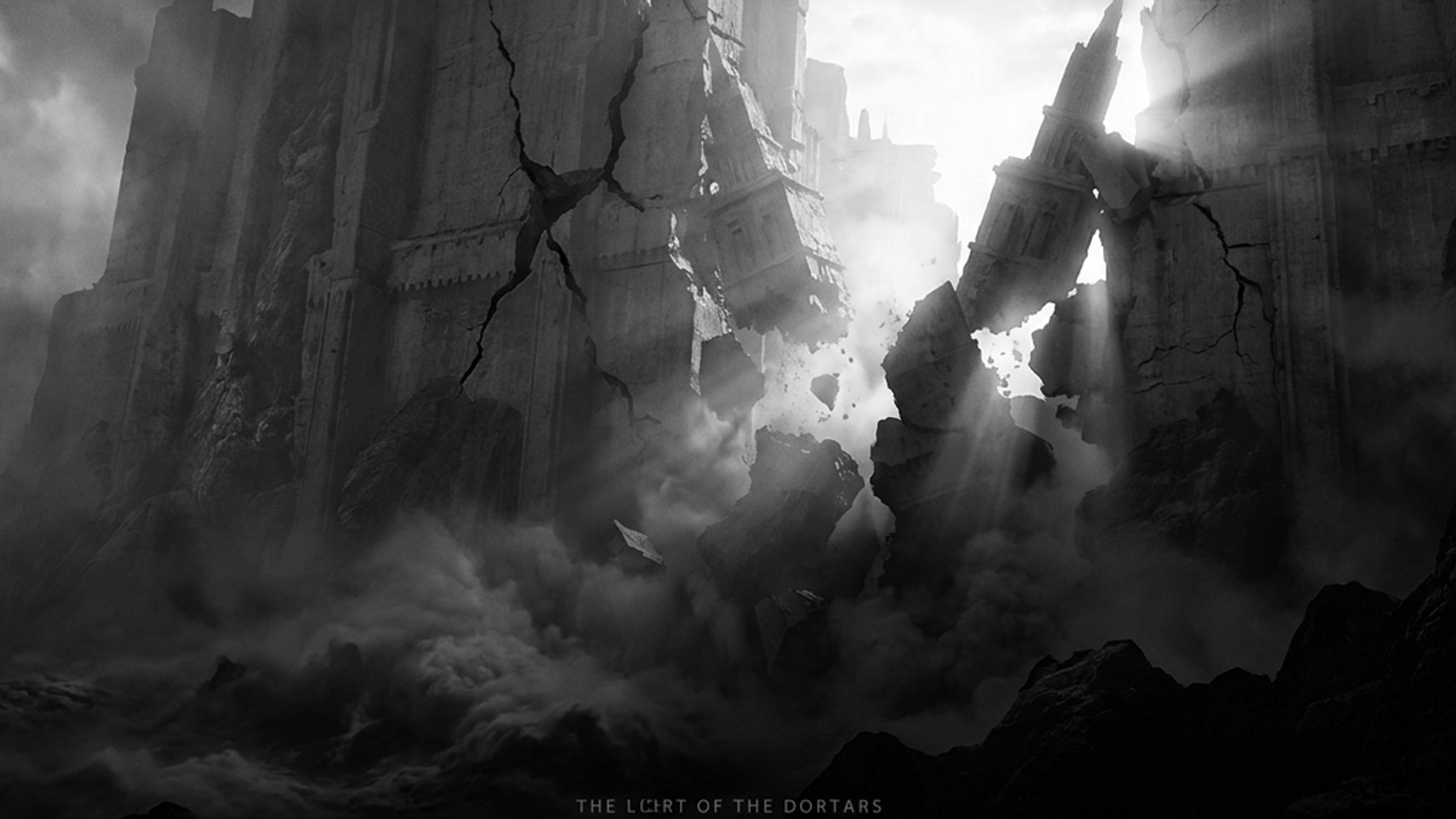
An existential crisis, read through this book, is what happens when the walls of your cell start to crack.
The Preface describes the ordinary state of being human as living inside a built structure: body, name, story. That structure is not a lie exactly - it is necessary. It lets you function, plan, love, work. But it is built, and built things can fracture. An existential crisis is the moment the walls that felt solid - who you are, what matters, why any of it means anything - suddenly show their seams. The question is no longer "what should I do about my situation" but "what even is any of this, and why does it feel hollow."
Chapter 9 gives this a sharper shape. It describes reality as something we've divided into smaller and smaller pieces until we mistook ourselves for one of the small pieces - a small fish in an ocean, forgetting it is also the ocean. An existential crisis is often the moment that forgetting stops working. The piece feels its smallness and asks what it's a piece of. That question can't be answered from inside the piece. It has to widen out, and widening feels, at first, like falling apart rather than opening up.
Chapter 6 names the deeper structure under this. Every story you've built about yourself rests on some anchor - a belief, an identity, a sense of solid ground. Follow the chain down far enough and you find there is no anchor underneath; there is you. An existential crisis is often exactly that discovery arriving uninvited: the ground you were standing on turns out not to have been ground at all, and for a while there is nothing to stand on. The book is honest that this is disorienting, not comfortable. It calls it a realization the self "rushes toward" - toward the surface, toward a new vantage point - but the rushing itself can feel like drowning before it feels like surfacing.
Chapter 5 offers the mechanics of why this state is not a malfunction. Life moves in tension between poles - order and chaos, form and dissolution. An existential crisis is what a build-up of unresolved tension looks like from the inside, when the old structure can no longer absorb the pressure and something has to give. The book's language for this elsewhere is direct: form must dissolve to release energy. Nothing new is born without something collapsing first.
The article on ego death speaks to the same territory in plainer terms and is worth naming here because it does not romanticize it: it describes this collapse as genuinely destabilizing, sometimes dangerous, not a curated list of enlightenment symptoms. An existential crisis, in that light, is not a spiritual accessory. It is the ego - your working story of yourself - recognizing a real threat to its continuity and resisting with anxiety that has no clear object, because the threat is not external. It's the story itself starting to give way.
What the book does not offer is a technique to make the crisis stop. What it offers is a reframe: the crack is not damage to be repaired back to the old shape. It's the gate. The old cell doesn't get patched - it gets outgrown. The discomfort is the price of the room getting larger, not a sign that something has gone wrong.
Read more
This page is AI-generated by the Holy Paradox analysis tool “Ask the book”. The text has been reviewed and was published on 2 September 2026 because it resonates deeply with the book’s message.
Want to explore further? Use Ask the book — type your own question.